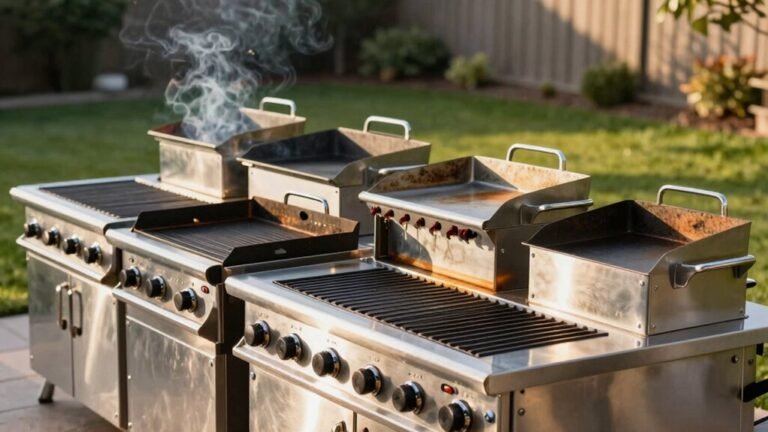


To season your new Blackstone griddle, start by cleaning it thoroughly with warm soapy water and drying completely. Heat the griddle to 350-400°F for 10 minutes, then apply a thin, even layer of high-smoke-point oil like avocado or canola using paper towels. Let the oil smoke for 10-15 minutes until it polymerizes. Repeat this process 2-4 times until you achieve a uniform dark surface. Following these essential steps will guarantee your griddle’s ideal performance and longevity.
Why Seasoning Your Griddle Matters
When you invest in a Blackstone griddle, proper seasoning becomes essential for creating an exceptional cooking surface that will serve you for years to come. The characteristics of seasoning transform your griddle’s surface through oil polymerization, forming a durable protective layer that bonds directly to the metal.
You’ll experience immediate benefits of non-stick performance as the seasoned surface prevents food from sticking and allows for superior heat distribution. This protective barrier doesn’t just enhance your cooking – it also shields your griddle from rust and corrosion while improving its longevity. The seasoning process creates a surface that’s easier to clean, maintains better heat retention, and develops complex flavors in your food through improved searing and caramelization capabilities. Much like proper cooking times are crucial for perfectly grilled tuna steaks, maintaining precise temperature control on your seasoned griddle ensures optimal results. Using high smoke point oils like vegetable or flaxseed oil ensures optimal seasoning results. Just like proper storage helps preserve smoked salmon’s quality, maintaining your seasoned griddle surface ensures lasting performance.
Essential Tools and Materials for Griddle Seasoning
Having a properly seasoned griddle starts with assembling the right tools and materials. You’ll need essential griddle accessories including a bucket, dish soap, and heat-resistant gloves for safe handling. Choose your seasoning oil carefully – options include Blackstone Cast Iron Conditioner, flaxseed oil, vegetable oil, canola oil, or avocado oil.
For proper cooking techniques, gather tools like a thermometer to monitor temperature, heavy-duty scraper for cleaning, and a large metal spatula. Don’t forget safety equipment: tongs, fire extinguisher, and adequate ventilation are vital. Keep paper towels or cloth handy for oil application, and make certain you have a well-lit workspace. A plastic squeeze bottle helps control oil distribution during the seasoning process. This essential process will create a durable coating that protects your griddle surface for years to come. A reliable meat thermometer is crucial since reaching proper temperature is more important than cooking time when preparing foods like fresh sausages. For optimal results when grilling meats like chicken legs, maintain a medium-high heat of 375-450°F on your griddle surface.
Initial Cleaning and Surface Preparation
A spotless surface forms the foundation for proper griddle seasoning. Before you begin the cleaning techniques, guarantee you’re working in a well-ventilated area. Mix mild dish soap with warm water, then thoroughly scrub every inch of your griddle’s surface to remove factory oils, dust, and manufacturing residues. Using shop towels will ensure a lint-free cleaning process for optimal results. Using a stainless steel sponge can help remove stubborn residues effectively while protecting the surface. Just like with gas grills, using mild detergents helps prevent damage to cooking surfaces.
Your surface preparation isn’t complete until you’ve rinsed away all soap residue with clean water. Any remaining soap can interfere with the seasoning process. Immediately dry the griddle with paper towels or a clean cloth to prevent rust formation. Once dry, you’ll need to preheat the griddle to 350-400°F for about 10 minutes. This vital step opens the metal’s pores and evaporates any lingering moisture, creating the ideal conditions for oil absorption.
Choosing the Best Oil for Seasoning
Selecting the right oil for seasoning your Blackstone griddle can make the difference between a durable, non-stick surface and a frustrating cooking experience. When making your oil selection, focus on options with high smoke points and neutral flavor profiles.
Just like aluminum foil paste effectively cleans grill surfaces without damage, proper oil selection protects your griddle’s cooking surface. Avocado oil stands out as a top choice, offering an impressive 520°F smoke point and excellent durability. Applying a thin layer of oil, approximately 2-3 tablespoons, ensures proper coverage during the seasoning process. Canola oil provides a cost-effective alternative that’s widely recommended by Blackstone. While flaxseed oil creates a hard, glossy finish, it’s expensive and can become brittle over time.
Avoid olive oil, peanut oil, and coconut oil, as they either have low smoke points or impart unwanted flavors. For best results, stick with Blackstone’s Cast Iron Conditioner or high-smoke-point neutral oils that will create a lasting, protective seasoning layer. After applying your chosen oil, let the griddle burn until smoking for proper seasoning development.
Step-by-Step Seasoning Process
Once you’ve chosen your seasoning oil, proper griddle preparation becomes essential for achieving a durable non-stick surface. Start by thoroughly cleaning your griddle with warm, soapy water to remove factory residues, then dry it completely to prevent rust formation. For extra cleaning power, you can create a natural baking soda paste to remove any stubborn residue.
Your seasoning techniques begin with preheating the griddle to 350-400°F for 10 minutes. Apply your first oil application using a paper towel, ensuring an extremely thin, even layer across the entire surface. Heat until the oil smokes, typically 10-15 minutes. Similar to medium-high heat grilling, this temperature range ensures proper oil polymerization. Repeat this process 2-4 times, allowing each layer to smoke and polymerize fully. You’ll notice the surface darkening with each cycle. Remember to wear heat-resistant gloves while handling hot surfaces during the seasoning process.
Finally, apply an ultra-thin protective coat of oil once cooled, and cover your griddle with a weather-resistant cover to maintain its seasoning.
Common Seasoning Mistakes to Avoid
While seasoning your Blackstone griddle may seem straightforward, several vital mistakes can undermine your efforts to create a durable non-stick surface.
Among the most common mistakes, you’ll want to avoid using bacon for initial seasoning, as its preservatives and additives prevent proper oil polymerization. Don’t overload your griddle with oil; instead, apply thin, even coats using a cloth or paper towel. Another vital pitfall is insufficient heat – your griddle must reach 450-500°F for proper polymerization. You should clean while the griddle’s still hot, as cold cleaning leads to stuck-on debris. Finally, don’t neglect ongoing maintenance. The seasoning layer requires periodic touch-ups, especially after cooking acidic foods or heavy use, to maintain its non-stick properties and prevent rust. Using animal fat like lard provides excellent results for initial seasoning, creating a durable protective coating. For optimal results, select oils with high smoke points like vegetable or canola oil when seasoning your cooking surface. Repeating the seasoning process 2-4 times helps build the most effective non-stick surface.
Signs of a Properly Seasoned Griddle
A properly seasoned Blackstone griddle exhibits specific visual and functional characteristics that confirm its readiness for cooking. You’ll notice a uniform dark black or brown surface with a smooth, matte finish that’s free from sticky spots or raw metal patches. Visual indicators include consistent coloring across the entire cooking surface, including edges and corners, with no signs of rust or uneven discoloration. The optimal seasoning process requires high heat bonding of multiple thin oil layers to achieve this appearance. Just like with grilling vegetables, maintaining consistent heat levels ensures even cooking performance across the entire surface. Similar to a clean grill grate, regular maintenance between uses helps preserve the seasoning quality. Functional signs become apparent during cooking: food releases effortlessly, eggs and pancakes slide smoothly, and you’ll need less oil for cooking. The surface should feel hard and smooth to touch, not flaky or rough. When cleaning, you’ll find that food residue wipes away easily without requiring harsh scrubbing. These characteristics indicate that your griddle’s seasoning has properly polymerized, creating an effective non-stick barrier.
Long-Term Care and Maintenance Tips
Maintaining your properly seasoned Blackstone griddle requires consistent care and attention to detail. For rust prevention, store your griddle in a dry place and apply a protective layer of oil after each use. Don’t let moisture accumulate on the surface, and always cover your griddle when it’s not in use. Set medium heat for 3-5 minutes before starting each cooking session. Use heat-resistant mitts to protect your hands during cleaning and maintenance.
Establish a regular cleaning routine that avoids harsh chemicals or abrasive cleaners. After cooking, clean with warm water and scrape off any food residue. Similar to stainless steel grills, using natural cleaning solutions like vinegar or baking soda can safely remove tough stains. Once clean, dry the griddle thoroughly and apply a thin coat of oil or seasoning. Store your griddle flat, avoiding stacking items on top that could scratch the surface. Check monthly for signs of rust and address any issues immediately. Regular conditioning with quality griddle seasoning will help maintain the non-stick surface and extend your griddle’s lifespan.
Restoring and Re-Seasoning Your Griddle
Restoring and re-seasoning your Blackstone griddle requires five essential steps to revive its non-stick surface. First, scrub the surface with mild soap and warm water to remove rust and residue. These restoration techniques guarantee a clean foundation for seasoning. Next, dry the surface thoroughly and heat it to 350-400°F to open the metal’s pores. Then, apply thin layers of high-smoke-point oil using paper towels, avoiding pooling. For effective re-seasoning tips, repeat the oiling and heating process 3-4 times until achieving a uniform dark color. The chemical polymerization process occurs as the oil bonds with the metal surface. Much like achieving perfect grill marks on zucchini, maintaining consistent temperature is crucial for optimal results. Similar to creating a golden crust on grilled cheese, proper heat distribution ensures even seasoning across the griddle surface. Remember to maintain steady heat during each 15-30 minute cycle, allowing smoke to dissipate between layers. Finally, protect your restored surface with a light conditioning coat and store with a heavy-duty cover.
Best Foods to Cook After Seasoning
Once your Blackstone griddle is properly seasoned, you’ll want to start with foods that both test and enhance the non-stick surface. Begin with breakfast classics like buttermilk pancakes, fried eggs, and bacon – these items will help build additional seasoning layers while confirming your seasoning techniques were successful. The nonstick surface makes cleanup after cooking incredibly easy and efficient. Consider serving classic baked beans alongside your grilled proteins for a hearty, protein-rich side dish. For optimal results with chicken thighs, maintain a cooking temperature between 375-450°F to ensure juicy, tender meat.
For ideal cooking tips, progress to proteins like steak and chicken breast, which benefit from the griddle’s heat retention and non-stick properties. You’ll find that fatty foods like blue cheese stuffed burgers and sausage links continue improving your seasoning through use. Don’t hesitate to try versatile dishes such as stir-fries, fried rice, or Philly cheesesteaks – these combinations of ingredients will maximize your griddle’s potential while maintaining its protective coating.