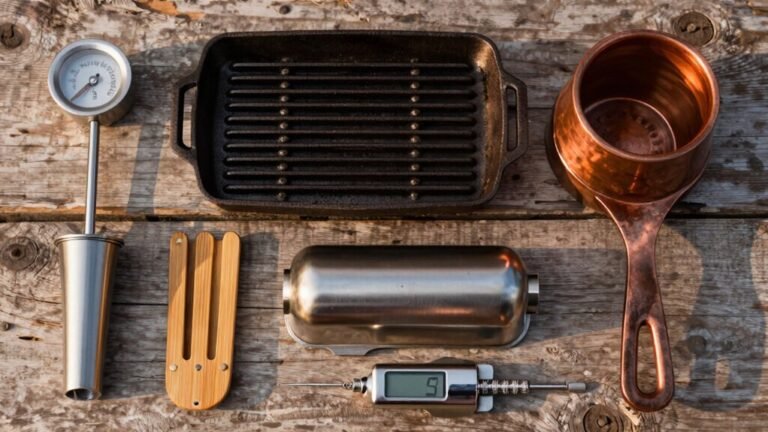


Start by disconnecting power and removing cooled grates for scrubbing with warm, soapy water and a nylon brush. Vacuum ash from the firepot and interior chamber using a shop-vac, then scrape carbon buildup from vents and walls. Apply food-safe degreaser to stubborn spots, wipe down the exterior, and lightly oil grates after drying to prevent rust. Empty the ash cleanout after every cook and perform deep cleaning every 50 hours of use. This systematic approach guarantees your grill maintains peak performance and flavor delivery throughout its lifespan.
Gathering Your Tools and Preparing Your Pellet Grill
Proper tool organization streamlines your workflow—arrange everything within reach before starting. Critical safety precautions include ensuring your grill is completely cooled, disconnecting the power source to prevent accidental ignition, and removing remaining pellets from the hopper. Work in a well-ventilated area and wear protective gloves and eyewear. Quality brushes and scrapers are essential for removing tough buildup and maintaining your pellet grill in optimal condition. Just as direct grilling requires proper heat control, these preparation steps prevent burns, chemical exposure, and equipment damage while setting you up for thorough, efficient cleaning. Similar to proper assembly of indoor kabobs, organizing your cleaning supplies in a logical sequence ensures the most efficient cleaning process.
Cleaning and Maintaining Your Grill Grates
With your tools ready and grill prepared, you’ll turn your attention to the grates—the component that demands the most frequent cleaning. Remove them only after they’ve cooled, then place on a non-abrasive surface. Shake off loose debris before applying warm, soapy water or a food-safe degreaser. Use a nylon scrub brush to work both sides, focusing on grooves where residue collects. For stubborn deposits, ball up aluminum foil and scrub with tongs—avoid wire brushes that damage grate materials and leave hazardous bristles. If your grates are dishwasher-safe and removable, you can run them through a dishwasher cycle for convenient deep cleaning. For especially rusty areas, a vinegar-salt solution left overnight can effectively loosen corrosion without harsh chemicals. Starting the cleaning while the grates are still slightly warm makes debris removal much easier.
Your cleaning frequency should follow the 18–20 cooking-hour rule, though you’ll spot-clean after each session. Rinse thoroughly, dry completely, and apply a light oil coating before reinstalling. This prevents rust and maintains non-stick properties across all grate materials.
[affiai keyword=”grill grate cleaning brush and scraper” template=”carousel” count=”3″
Deep Cleaning the Interior Components
Maintaining peak performance in your pellet grill requires systematic attention to interior components—areas where ash, grease, and carbon deposits accumulate with every cook. Start with tools organization: gather a shop-vac, wire brushes, scrapers, and grill-grade degreaser before beginning. Remove the firepot and burn grate, then vacuum all ash from the chamber. Scrape carbon buildup around holes and openings where airflow matters most. For residue removal on interior surfaces, apply degreaser to walls and lid underside, letting it soak several minutes before scrubbing with non-abrasive brushes. Clean the hopper with dry methods only—moisture causes pellet clumping and auger jams. Empty and clean the ash pot with a dry paper towel to prevent buildup between cooks. Just like gas grills, use mild soap solutions to tackle tough grime without damaging components. For stubborn stains, apply a paste of baking soda and water to affected areas. After thorough drying, reassemble components and season interior surfaces with high smoke point oil. Run a burn cycle to set the seasoning properly.
Caring for the Exterior and Vents
Your pellet grill’s exterior and ventilation system demand the same attention you give to cooking surfaces—neglect here compromises both performance and longevity. Apply degreaser or dedicated exterior cleaner to remove accumulated grease, preventing rust and enhancing durability. For stainless steel finishes, use specialized cleaners—never abrasive scrubbers that damage protective coatings. For optimal cleaning results, heat the grill to 400 degrees Fahrenheit to help soften stubborn grease and grime. A mixture of baking soda paste applied to tough exterior stains provides gentle yet effective cleaning power.
Inspect vents after every few sessions for ash or debris blockages. Clear them using soft brushes or compressed air, avoiding water that causes internal corrosion. Restricted airflow directly impacts temperature consistency and fuel efficiency.
Work top-down when cleaning, allowing degreasers to penetrate stubborn deposits before wiping with microfiber cloths. Remove vent covers for thorough cleaning. Address grease buckets regularly—overflow contributes to exterior grime and vent obstruction. Prompt post-cook maintenance prevents hardened buildup requiring aggressive intervention. Always ensure the grill is completely cooled before beginning any cleaning process for best results.
[affiai keyword=”pellet grill exterior cleaner degreaser” template=”carousel” count=”3″
Establishing Your Cleaning Schedule
Because pellet grills generate ash, grease, and combustion residue at predictable rates, you’ll achieve ideal performance by matching your cleaning intervals to actual usage patterns rather than arbitrary calendar dates. Empty your ash cleanout after every cook to prevent flameouts. Light cleaning should occur every 20 hours or five sessions, while deep cleaning becomes necessary around 50 hours of use. Your cleaning frequency depends on cooking method—long smokes without drip pans require more attention than quick grills. Track your hours and maintenance dates in a logbook for precision scheduling. High-use scenarios demand tighter intervals, while infrequent users can extend timeframes but must still remove ash and grease after each session. Between uses, spot clean the lid, side shelf, and cook racks to maintain optimal functionality. These maintenance tips prevent temperature fluctuations, reduce fire risk, and extend your grill’s lifespan considerably. Using a specialized grill cleaner can help remove stubborn carbonized grease without damaging your grill’s surfaces. For optimal grilling performance, maintain a consistent medium-high heat between 450-500°F when cooking foods like bell peppers and other vegetables.