
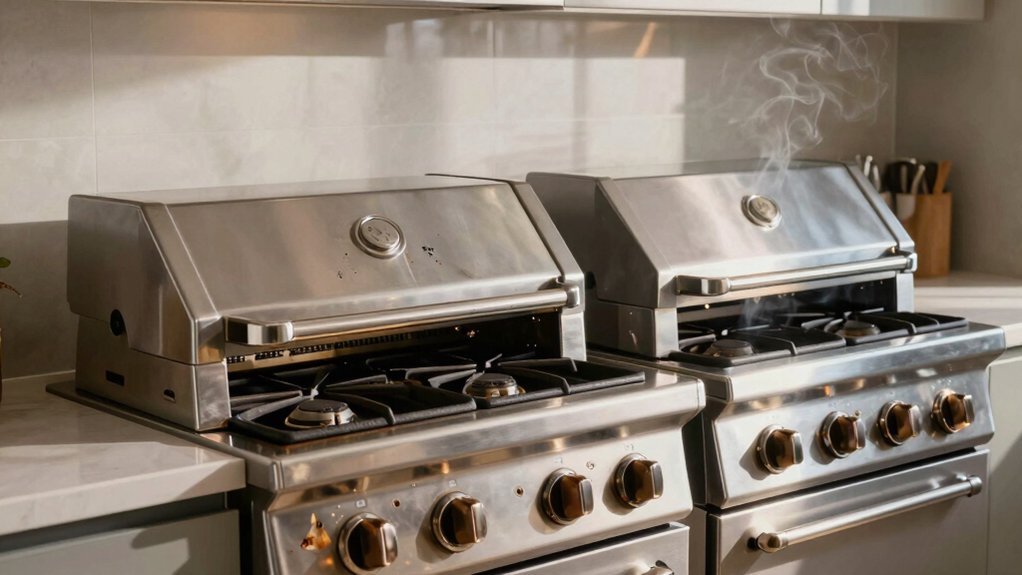
You’ve probably assumed that authentic grilling requires an outdoor setup, yet indoor stovetop options are challenging that notion. If you’re working with limited space or unpredictable weather, you don’t need to abandon your grilling ambitions. We’re examining two indoor gas grills that deliver real results—and what you’ll uncover about their performance might surprise you.
Quick Overview
- Iwatani Cassette Gas BBQ Grill YAKIMARU II features piezoelectric ignition and operates at 210-250°C for stovetop use.
- Non-stick fluorine-coated surface minimizes food sticking and simplifies cleanup after indoor cooking sessions.
- Compact 4.4-pound design with automatic shut-off valves ensures safe, reliable stovetop operation without gas leaks.
- Single fuel cartridge provides approximately 217 minutes of continuous burning time for extended cooking capabilities.
- Adjustable temperature control between 210-250°C enables versatile cooking styles from searing meats to roasting vegetables.
| Iwatani Cassette Gas BBQ Grill YAKIMARU II CB-SLG-2 |
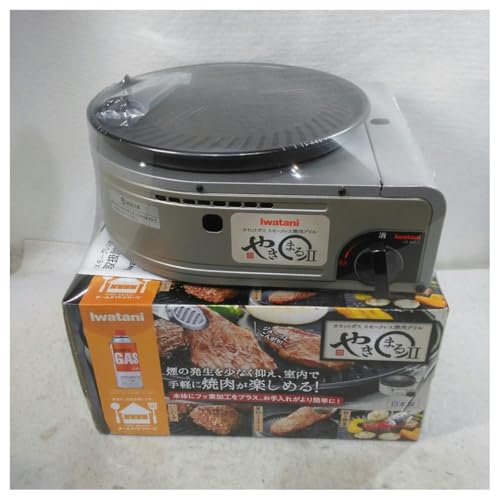
| Best for Compact Cooking | Fuel Type: Cassette gas cartridge | Ignition System: Piezoelectric ignition | Heat Output: 1000 watts | VIEW LATEST PRICE | Read Our Analysis |
| GasOne High Pressure Propane Burner with Heat Shield |

| High-Power Performance | Fuel Type: Propane | Ignition System: Manual ignition (implied) | Heat Output: High-pressure continuous flame | VIEW LATEST PRICE | Read Our Analysis |
More Details on Our Top Picks
Iwatani Cassette Gas BBQ Grill YAKIMARU II CB-SLG-2
If you’re seeking an indoor grilling solution that doesn’t demand much space, the Iwatani Cassette Gas BBQ Grill YAKIMARU II delivers a compact yet functional option for tabletop cooking. This portable grill weighs just 4.4 pounds and features a non-stick fluorine-coated surface that minimizes food sticking and simplifies cleanup. You’ll appreciate its piezoelectric ignition system and ability to reach temperatures between 210-250°C. The pressure-sensitive safety equipment guarantees worry-free operation, while the magnet-based cassette container system makes fuel swapping effortless. With approximately 217 minutes of continuous burning time per cartridge and a 4.6-star rating from over 2,200 customers, you’re getting a reliable performer that’s earned its spot as the #2 bestseller in Natural Gas Grills.
- Fuel Type:Cassette gas cartridge
- Ignition System:Piezoelectric ignition
- Heat Output:1000 watts
- Cooking Surface:Non-stick fluorine-coated grill
- Portability:Compact, space-saving design (2 kg)
- Safety Features:Pressure-sensitive safety equipment
- Additional Feature:Fluorine-coated non-stick surface
- Additional Feature:Smoke suppression technology
- Additional Feature:Magnet cartridge removal system
GasOne High Pressure Propane Burner with Heat Shield
The GasOne High Pressure Propane Burner with Heat Shield is your go-to solution for outdoor cooking enthusiasts who demand reliable, high-output performance. You’ll appreciate its patent-pending design that delivers steady, continuous flames for even cooking without burning your food. The dual heat shields protect your setup—the top guard shields hose connections from flames and guards against oil spillage, while the bottom shield prevents heat damage to surrounding components. Built with heavy-duty metal construction and a cast iron burner head, this burner withstands intensive use across camping trips, tailgates, seafood boils, and home brewing projects. The high-quality hose assembly guarantees consistent gas output and durability you can rely on.
- Fuel Type:Propane
- Ignition System:Manual ignition (implied)
- Heat Output:High-pressure continuous flame
- Cooking Surface:Cast iron burner head
- Portability:Portable outdoor burner
- Safety Features:Top and bottom heat shields
- Additional Feature:Cast iron burner head
- Additional Feature:Dual heat shield protection
- Additional Feature:High-quality hose assembly
Factors to Consider When Choosing an Indoor Gas Grill Stove Top
When you’re selecting an indoor gas grill stovetop, you’ll want to prioritize safety features like automatic shut-off valves and sturdy heat shields to protect your countertops. You should also evaluate the cooking surface size to verify it fits your space and meal prep needs, along with the heat output power to confirm it’ll sear and cook your food efficiently. Consider how portability, storage options, and non-stick coating benefits align with your kitchen setup and maintenance preferences.
Safety Features Matter
Because you’re cooking indoors with an open flame, safety features aren’t optional—they’re crucial. You’ll want pressure-sensitive safety devices that prevent gas leaks and temperature hazards. A reliable ignition system like piezoelectric ignition guarantees consistent lighting while minimizing flare-up risks.
Smoke control features matter greatly when you’re cooking inside. They reduce harmful fume buildup and maintain better air quality in your kitchen. You should also prioritize a design that minimizes food sticking and burning—excessive residue can create fire hazards.
Finally, consider grills with removable components or magnetic systems. These features reduce burn risks and make maintenance easier and safer. When you evaluate indoor gas grills, these safety elements should influence your decision more than any other factor.
Cooking Surface Size
Your indoor gas grill’s cooking surface size directly determines how much food you can prepare simultaneously, making it one of the most practical considerations when choosing between models. Most indoor gas grills offer cooking surfaces ranging from 63 to 100 square inches, greatly impacting your cooking capacity.
A larger surface accommodates family meals and gatherings effortlessly, while also distributing heat more evenly to prevent uneven cooking. However, if you’re working with limited counter space, a smaller grill proves more practical without sacrificing adequate cooking capability.
Consider your typical cooking needs carefully. Do you regularly grill for two people, or do you frequently host events? Matching your grill’s surface size to your lifestyle guarantees you’ll enjoy both functionality and convenience.
Heat Output Power
The wattage of an indoor gas grill fundamentally affects how quickly it heats up and how well it performs during cooking. You’ll find most models range from 800 to 1500 watts, providing adequate temperatures for various foods. Opting for higher wattage, such as 1000 watts, gives you quicker heating and improved cooking efficiency, resulting in better searing outcomes.
Temperature ranges typically span between 210°C and 250°C, suitable for grilling meats and vegetables effectively. You’ll achieve more consistent heat output when your grill features effective ignition and stable heating systems, which are essential for even cooking throughout your meal.
Additionally, consider continuous burning time—some grills operate around 217 minutes on a single fuel canister, allowing you longer cooking sessions without interruptions.
Portability and Storage
When you’re shopping for an indoor gas grill stovetop, portability and storage shouldn’t take a backseat to cooking performance. You’ll want a lightweight model with compact dimensions that won’t consume valuable space in your kitchen or storage areas.
Look for grills featuring removable containers and components—they’ll simplify both storage and cleanup. Portable design elements like foldable legs or collapsible frames make setup and breakdown effortless, letting you relocate your grill between rooms or apartments easily.
Non-stick surfaces deserve your attention too. They reduce post-cooking cleaning demands, making storage less burdensome. Additionally, consider the grill’s continuous burning time. Longer operation periods between refills mean you won’t interrupt indoor cooking sessions to swap fuel containers, enhancing practicality for extended use in confined spaces.
Non-Stick Coating Benefits
Because food doesn’t cling to non-stick surfaces, you’ll flip and remove grilled items without tearing or sticking, which means better-looking finished dishes. You’ll also need less oil during cooking, helping you prepare healthier meals with reduced calorie counts.
Cleanup becomes remarkably simple with non-stick coatings. Food residue and particles wipe away effortlessly, saving you time and effort after cooking. The smooth surface prevents stubborn buildup that typically requires scrubbing.
These coatings use fluorine-based materials designed to handle high temperatures, ensuring your grill withstands regular use without degradation. You’ll enjoy years of reliable performance from your investment.
Additionally, non-stick surfaces minimize burning and sticking, which preserves your food’s natural flavors and enhances your overall cooking experience, making indoor gas grilling more enjoyable and efficient.
Fuel Type Selection
Selecting the right fuel type for your indoor gas grill stovetop is essential since each option—propane, natural gas, and butane—offers distinct advantages based on your location, cooking frequency, and setup. Propane stands out for its portability and versatility, making it ideal if you want flexibility between indoor and outdoor cooking. Natural gas requires a direct home connection but delivers continuous, cost-effective fuel for frequent use. Butane works well for smaller portable grills, providing quick heat and convenient refills, though it may limit temperature control.
Before deciding, verify that your chosen fuel type matches your grill’s design and ignition system. This compatibility secures peak performance and safe operation throughout your cooking experience.
Temperature Control Range
Three key factors make temperature control range essential when choosing an indoor gas grill stovetop: versatility, consistency, and precision.
You’ll want a model offering ranges like 210 to 250°C, which enables you to sear meats effectively while also roasting vegetables at lower temperatures. This versatility means you’re not limited to one cooking style.
Consistent temperature maintenance reduces the risk of undercooking or burning your food, giving you reliable results every time. When you’re cooking different dishes, adjustable temperature settings provide the precision necessary for specific recipes, directly improving food quality and flavor.
Additionally, look for models with pressure-sensitive safety equipment. These features enhance your cooking environment’s safety when managing higher temperatures, protecting you while you experiment with various techniques.