

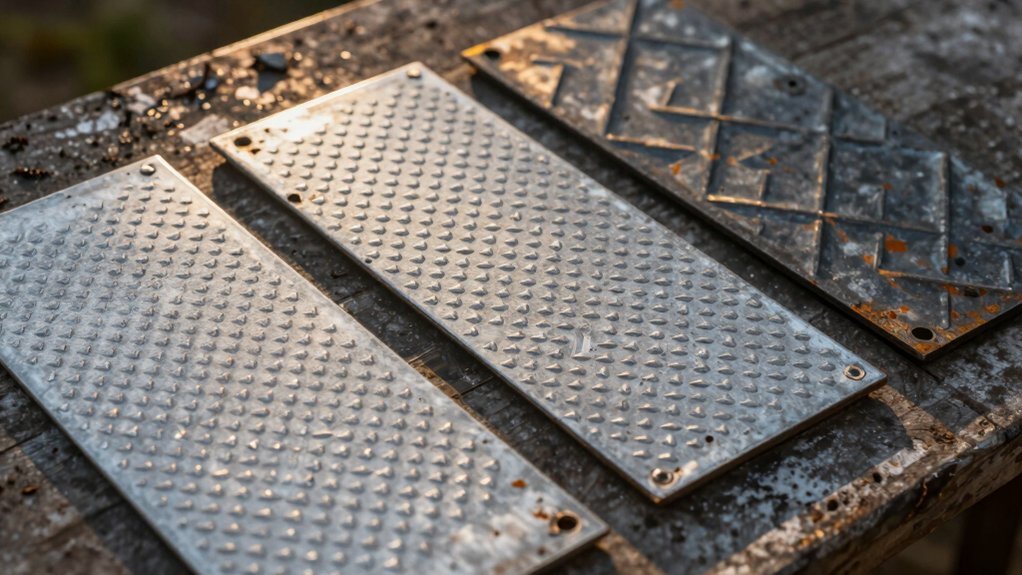
You’re probably wondering if your current grill setup is performing at its best. The right expanded metal can profoundly impact airflow, durability, and overall grilling results. But with so many options available, how do you know which one’s right for your needs? We’ll break down the three game-changing materials that’ll elevate your grilling experience.
Quick Overview
- Perforated stainless steel mesh with 0.32-inch holes provides rust-resistant durability for long-lasting grill performance and reliability.
- 14-gauge stainless expanded metal offers 80% airflow opening with diamond-shaped holes for superior ventilation and structural strength.
- Black aluminum alloy car grill mesh features 4mm x 8mm rhombic holes for optimized engine airflow and easy installation.
- Material selection between 304 stainless steel and aluminum affects durability, with stainless offering superior resistance to bending pressure.
- Gauge thickness ranging from 14GA to 20GA determines structural integrity; thicker gauges handle heavy-duty grilling demands better.
| Perforated Stainless Steel Sheet Metal Mesh (20GA) |
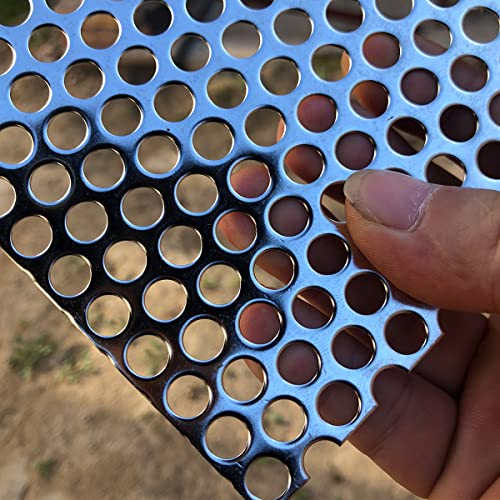
| Best for Precision | Material: 304 Stainless Steel | Hole Pattern: Displaced Triangular, 0.32″ diameter | Dimensions: 11.8″ x 5.9″ | VIEW LATEST PRICE | Read Our Analysis |
| 14 Gauge Stainless Expanded Metal Sheet Screen |

| Heavy-Duty Champion | Material: 304 Stainless Steel | Hole Pattern: Diamond-shaped, 0.4″ x 1″ | Dimensions: 40″ x 16″ | VIEW LATEST PRICE | Read Our Analysis |
| Car Grill Mesh Metal Sheet Black Aluminum Alloy |

| Universal Car Solution | Material: Black Painted Aluminum Alloy | Hole Pattern: Rhombic, 4mm x 8mm | Dimensions: 47″ x 16″ (120cm x 40cm) | VIEW LATEST PRICE | Read Our Analysis |
More Details on Our Top Picks
Perforated Stainless Steel Sheet Metal Mesh (20GA)
If you’re after a grill component that won’t rust and can handle years of heat exposure, you’ll want to take into account 304 stainless steel. This perforated mesh sheet offers 0.32-inch holes in a displaced triangular pattern, ensuring complete perforation across its 11.8 x 5.9-inch surface. At 20GA thickness, you’ll get durability without excessive weight. The polished finish resists corrosion beautifully, while its versatility shines whether you’re upgrading your grill grate, managing smoke exhaust, or retaining embers. Installation’s straightforward—weld, screw, or tie it down. Watch for sharp edges during handling, and you’ve got a reliable, long-lasting grill upgrade that performs functionally and looks professional.
- Material:304 Stainless Steel
- Hole Pattern:Displaced Triangular, 0.32″ diameter
- Dimensions:11.8″ x 5.9″
- Gauge/Thickness:20GA
- Primary Applications:BBQ grates, burn barrels, decorative screens
- Rust Resistance:Rust-resistant stainless steel
- Additional Feature:Machine-cut precise sizing
- Additional Feature:Multiple installation method options
- Additional Feature:24-hour customer support guarantee
14 Gauge Stainless Expanded Metal Sheet Screen
The 14GA stainless expanded metal sheet screen delivers professional-grade durability for anyone seeking a grill component that won’t succumb to rust or daily wear. You’ll appreciate the 304 stainless steel construction that resists corrosion in any environment. At 0.08″ thick, this material’s hardness prevents deformation from heat or pressure. The 40″ x 16″ dimensions with diamond-shaped holes and 80% opening area provide excellent airflow control. You can customize the appearance by spray-painting it your desired color. Installation’s straightforward since you receive it flat, not curled. However, you’ll need an angle grinder for cutting—ordinary tools won’t work. This versatile sheet excels as burn barrel grates, decorative grilles, or protective screens, making it invaluable for thorough grill setups.
- Material:304 Stainless Steel
- Hole Pattern:Diamond-shaped, 0.4″ x 1″
- Dimensions:40″ x 16″
- Gauge/Thickness:14GA (0.08″)
- Primary Applications:Burn barrel grates, screen doors, grilles
- Rust Resistance:Rust-resistant stainless steel
- Additional Feature:80% opening area maximum
- Additional Feature:Angle grinder cutting required
- Additional Feature:Spray-paintable customization option
Car Grill Mesh Metal Sheet Black Aluminum Alloy
AICARS’ 47”×16” car grill mesh delivers maximum ventilation while safeguarding your engine and radiator from road debris—making it ideal for vehicle owners who won’t compromise on protection or durability. You’ll appreciate the black painted aluminum alloy construction, which resists rust and corrosion effectively. The expanded metal design features 4mm × 8mm rhombic holes that optimize airflow without sacrificing strength. You can easily cut and customize it for any bumper, hood vent, or vehicle opening thanks to its universal fit design. With self-adhesive installation and a 4.3-star rating from over 100 reviews, this mesh combines practicality with reliable performance for DIY enthusiasts seeking dependable protection.
- Material:Black Painted Aluminum Alloy
- Hole Pattern:Rhombic, 4mm x 8mm
- Dimensions:47″ x 16″ (120cm x 40cm)
- Gauge/Thickness:Not specified
- Primary Applications:Car grilles, hood vents, vehicle protection
- Rust Resistance:Anti-rust aluminum alloy
- Additional Feature:Self-adhesive installation included
- Additional Feature:Universal automotive fit compatibility
- Additional Feature:Easy DIY cutting/shaping
Factors to Consider When Choosing Expanded Metal for Grills
When you’re selecting expanded metal for your grill, you’ll want to evaluate several critical factors that directly impact performance and longevity. You should consider the material composition, gauge thickness, hole dimensions, corrosion resistance, and how the mesh will mount to your specific grill model. Each of these elements plays a crucial role in determining whether your expanded metal will withstand heat, weather, and regular use effectively.
Material Selection Matters
Because you’ll want your grill to perform reliably for years, selecting the right expanded metal is essential. Material choice directly impacts durability and maintenance requirements.
304 stainless steel stands out as the premier option for outdoor grills. Its rust resistance guarantees longevity in harsh weather conditions, protecting your investment from corrosion and degradation. You’ll appreciate how it withstands moisture and temperature fluctuations without requiring constant maintenance.
If weight matters to your setup, aluminum alloy alternatives provide a lightweight solution while maintaining excellent corrosion resistance. However, they sacrifice some durability compared to stainless steel.
Consider your specific climate and usage patterns. Coastal environments or high-moisture areas demand stainless steel’s superior protection. For moderate conditions, aluminum alloy offers adequate performance with easier handling during installation and repairs.
Gauge and Thickness
The gauge of your expanded metal fundamentally determines its strength and performance in grill applications. Lower gauge numbers like 14GA indicate thicker metal—0.08 inches—providing superior durability and resistance to bending under heavy loads. However, this thickness demands specialized tools like angle grinders for cutting.
Higher gauge options like 20GA offer easier workability but sacrifice durability and may bend more readily during use. You’ll also notice that thicker gauges feature larger openings, such as 0.4″ x 1″ holes, which increase airflow for better heat management.
When selecting your expanded metal, balance weight, strength, and functionality against your specific grilling needs. Consider whether you prioritize easy installation or long-term durability to make sure your choice effectively serves your setup.
Hole Size Dimensions
Your expanded metal’s hole dimensions play just as essential a role as gauge thickness in determining how well your grill performs. You’ll typically find standard sizes ranging from 0.4 to 1 inch in width, though smaller 4mm x 8mm holes work well for debris prevention while maintaining adequate airflow.
Diamond-shaped holes represent the prime choice, balancing structural integrity with ventilation needs. They’re engineered to provide strength without compromising performance.
Consider the open area percentage when making your selection. Expanded metals featuring up to 80% opening area maximize airflow, directly enhancing heat distribution across your grill surface. This increased ventilation translates to superior cooking results and more consistent temperatures throughout your grilling experience.
Durability and Rust Resistance
When you’re investing in expanded metal for your grill, you’ll want material that’ll withstand years of outdoor exposure without deteriorating. Consider 304 stainless steel, which offers exceptional rust resistance and maintains its integrity against the elements. You’ll also benefit from thicker gauges like 14GA steel, which provides superior strength and resists bending under heavy loads or heat stress.
The hardness of stainless steel expanded metal guarantees your grill maintains its shape during regular use. If you prefer alternatives, aluminum alloys deliver excellent anti-rust properties suitable for various outdoor conditions.
Don’t overlook maintenance either. Regular cleaning preserves both durability and aesthetic appeal, greatly extending your expanded metal’s lifespan and performance over time.
Installation Method Compatibility
Once you’ve selected a durable expanded metal, you’ll need to contemplate how you’ll actually install it in your grill. Different materials demand different installation approaches. Stainless steel‘s strength makes it ideal for welding, providing a permanent, secure bond. Aluminum alloy, conversely, offers flexibility—you can use self-adhesive methods or screws for quick, reversible installations perfect for DIY projects.
Thickness matters markedly. Thicker gauges like 14GA require robust techniques such as grinding or specialized tools, while thinner 20GA options accommodate simpler attachment methods. Always match your installation technique to your material’s characteristics. Incompatible methods risk bending or deforming your expanded metal during use, compromising both aesthetics and functionality. Consider your skill level, available tools, and permanence preferences when deciding your installation strategy.
Size and Coverage Area
Selecting the right dimensions for your expanded metal requires careful alignment between sheet size and your grill’s specific needs. Common options like 40″ x 16″ offer extensive coverage, while compact 11.8″ x 5.9″ sheets work for smaller applications. You’ll want to ascertain complete span across your grill to prevent heat loss and maintain cooking efficiency.
Consider the open area percentage—an 80% opening allows ideal airflow while providing structural support. Hole size matters too; diamond-shaped openings of 0.4″ x 1″ balance ventilation with debris protection. Gauge thickness, whether 14GA or 20GA, affects both durability and coverage. Measure your grill carefully before purchasing to guarantee proper fit and maximum performance.
Weight and Structural Strength
Beyond fitting your grill’s dimensions, you’ll need to evaluate how well your expanded metal can handle the physical demands of regular grilling. The gauge thickness directly impacts durability—a 14GA (0.08 inch) thickness strikes an ideal balance between strength and weight for heavy-duty applications. Your material choice matters equally; 304 stainless steel outperforms aluminum alloy in durability and resistance to bending under pressure, though it weighs more. Lighter materials offer easier handling and installation but require careful consideration for high-impact scenarios like outdoor grilling or harsh weather exposure. The hole configuration—such as diamond-shaped openings—distributes weight and stress across the mesh, enhancing structural integrity. These factors work together to determine whether your expanded metal withstands the rigors of consistent use.