
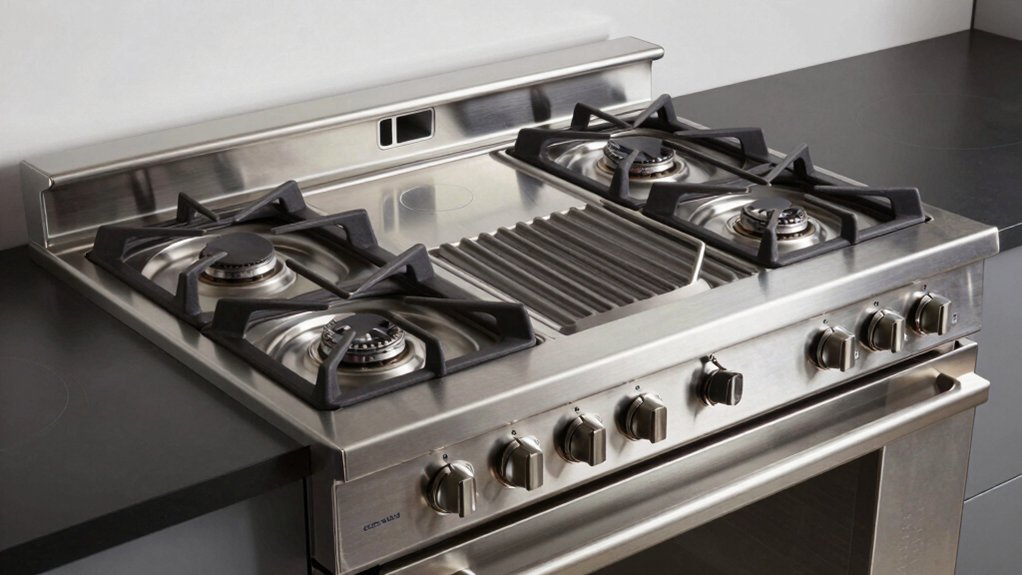
Like a restaurant kitchen condensing years of expertise into one compact space, you’re seeking a cooktop that doesn’t compromise on performance or design. The Noxton 30″ Downdraft Electric Cooktop promises chef-level cooking with integrated ventilation, but you’ll want to understand what separates genuine culinary capability from marketing hype. The specifications matter more than you’d think.
Quick Overview
- 6000W total power with four radiant burners delivers chef-approved cooking performance for professional-grade results at home.
- Nine heat settings enable precise temperature control, allowing simultaneous cooking at different temperatures on separate burners.
- Integrated downdraft ventilation system removes smoke and odors efficiently without requiring bulky overhead installations.
- Requires dedicated 240V hardwired circuit installation by qualified electrician; no standard outlet compatibility available.
- Integrated grill provides versatile cooking options while seamlessly integrating into various kitchen styles and designs.
| Noxton 30″ Electric Cooktop with Downdraft Vent |

| Best Overall | Total Power Output: 6000W | Burner Configuration: 4 burners (two 1800W, two 1200W) | Heat Settings: 9 settings per burner | VIEW LATEST PRICE | Read Our Analysis |
More Details on Our Top Picks
Noxton 30″ Electric Cooktop with Downdraft Vent
If you’re tired of bulky range hoods dominating your kitchen aesthetic, the Noxton 30″ Electric Cooktop with Downdraft Vent is your solution. This 6000W cooktop features four radiant burners—two at 1800W and two at 1200W—giving you versatile cooking power. You’ll appreciate the integrated downdraft ventilation system that removes smoke, grease, and odors through a charcoal filter without external ducting. Each burner offers nine heat settings for precise control, whether you’re simmering or boiling. The 99-minute timer, auto shut-off, and child safety lock provide peace of mind. However, remember that you’ll need a qualified electrician for the mandatory 240V hardwired installation.
- Total Power Output:6000W
- Burner Configuration:4 burners (two 1800W, two 1200W)
- Heat Settings:9 settings per burner
- Ventilation Type:Integrated downdraft with charcoal filter
- Safety Features:Timer, auto shut-off, pause function, child lock
- Electrical Requirements:240V hardwired connection
- Additional Feature:Integrated downdraft ventilation system
- Additional Feature:Charcoal filter under-counter venting
- Additional Feature:99-minute auto shut-off timer
Factors to Consider When Choosing a 30 Downdraft Electric Cook with Grill
When you’re shopping for a 30″ downdraft electric cooktop with grill, you’ll want to evaluate several critical factors that directly impact cooking performance and everyday usability. You should examine the power output capacity and burner heat settings to guarantee they match your cooking style, while also analyzing the ventilation system type, installation requirements, and safety features that’ll best fit your kitchen setup. These considerations work together to determine whether a model truly meets your needs or falls short of your expectations.
Power Output Capacity
Three key factors determine a 30″ downdraft electric cooktop’s performance: its total wattage, burner distribution, and adjustability.
You’ll find that most 30″ downdraft models deliver between 6000W and 8000W of total power output. This wattage capacity directly impacts your cooking speed—higher-powered cooktops heat faster, letting you boil water and sear meats more efficiently.
When evaluating power distribution, you’ll benefit from models offering multiple burners at varying wattages. A configuration with two 1800W burners and two 1200W burners lets you cook simultaneously at different temperatures, maximizing your meal preparation flexibility.
Adjustable power settings give you precise heat control for diverse cooking techniques. Whether you’re simmering delicate sauces or frying at high temperatures, you’ll appreciate having granular control. Sufficient wattage capacity guarantees your cooktop handles heavy cookware without energy loss, delivering reliable performance across all your cooking needs.
Burner Heat Settings
Precise temperature control separates good cooking from great cooking, and you’ll find that burner heat settings are essential to achieving it. You’ll want to select a cooktop offering nine or more heat settings, enabling you to fine-tune temperatures for any culinary task. This flexibility lets you sear steaks at high power, then drop to low settings for delicate simmering without switching burners.
Look for models featuring varied wattage options—from high-powered burners reaching 1800W to medium and low settings. This diversity accommodates different pot sizes and cooking techniques efficiently. Equally important, you’ll appreciate heat settings that adjust smoothly and deliver consistent performance across all burners, ensuring reliable, predictable results every time you cook.
Ventilation System Type
A powerful ventilation system is your defense against lingering cooking odors, smoke, and grease buildup in your kitchen. When evaluating downdraft cooktops, you’ll want to prioritize the ventilation type, as it directly affects your cooking experience and air quality.
Look for integrated systems with built-in range hoods that eliminate the need for bulky overhead installations, giving you a sleeker kitchen design. Verify that your chosen model features multiple speed settings, allowing you to adjust airflow intensity based on your cooking demands.
If external venting isn’t feasible, make sure the system includes quality charcoal filters for effective air recirculation. The power and efficiency of the ventilation unit are critical—they determine how well your cooktop removes smoke and grease while maintaining peak kitchen freshness throughout your cooking sessions.
Installation Requirements
Before you purchase a 30″ downdraft electric cooktop, you’ll need to understand the electrical and structural demands it requires. Most models necessitate a 240V hardwired connection, which means you’ll need a qualified electrician to handle installation safely. You can’t simply plug these units into standard 110V kitchen outlets.
Verify that your countertop’s cut-out measurements align with the cooktop’s dimensions to confirm a seamless fit. The integrated ventilation system demands additional consideration—you’ll need adequate space for charcoal filters and may require cabinetry adjustments.
Don’t overlook local building codes and regulations. Check with your municipality before installation begins to affirm compliance. These preliminary steps prevent costly mistakes and guarantee your cooktop operates safely and efficiently in your kitchen.
Safety Features Included
When you’re evaluating a 30″ downdraft electric cooktop, you’ll want to prioritize the safety features that protect both your family and your home. A 99-minute timer helps prevent overcooking and potential accidents by alerting you when time’s up. Auto shut-off functions provide essential protection by automatically disabling burners after extended inactivity, eliminating forgotten-heat risks.
Child safety locks prevent accidental activation, giving you peace of mind in households with young children. The pause function lets you temporarily suspend cooking without losing your heat settings, proving invaluable during meal preparation interruptions. Multiple heat settings enable precise temperature control, reducing overheating dangers and fire hazards. Together, these features create a thorough safety system that allows you to cook confidently while maintaining full control over your cooking environment.
Counter Space Dimensions
Proper measurements form the foundation of a successful 30-inch downdraft electric cooktop installation. You’ll need to verify that your cooktop’s surface dimensions—approximately 30.31 inches wide by 20.47 inches deep—fit your available counter space comfortably. The cut-out requirements demand 28.74 inches by 19.3 inches, with a depth of 7.87 inches for suitable ventilation accommodation. Before purchasing, you should measure your countertop thoroughly to confirm adequate room for the cooktop and adjacent appliances or work surfaces. Don’t forget to account for the clearance needed for your downdraft ventilation system’s effective airflow. These precise measurements guarantee seamless installation, ideal kitchen functionality, and prevent costly mistakes during setup.
Cooking Surface Material
The cooking surface material you select will fundamentally shape your cooktop’s performance and longevity. You’ll find that ceramic, glass, and stainless steel are the industry standards, each offering distinct advantages. Your choice directly impacts heat distribution and cooking efficiency—materials with higher thermal conductivity heat more evenly and quickly.
Durability matters too. Quality surfaces resist scratches and stains, protecting your investment over years of use. You’ll appreciate how smooth materials simplify cleaning; food particles and grease won’t cling stubbornly to the surface, making maintenance effortless.
Don’t overlook aesthetics either. The material you choose contributes greatly to your kitchen’s overall design and visual appeal. By carefully weighing thermal performance, durability, maintenance requirements, and style preferences, you’ll select a cooking surface that aligns perfectly with your culinary needs and kitchen vision.
Electrical Connection Specifications
You’ll need to secure your 30-inch downdraft electric cooktop connects to a dedicated 240V hardwired circuit, as standard 110V outlets won’t support its power demands. This cooktop doesn’t come with a plug—it requires permanent electrical installation by a qualified electrician who’ll safely integrate it into your home’s electrical system.
Before purchasing, confirm the unit’s total power output aligns with your needs and your kitchen’s electrical capacity. A 6000W cooktop, for example, demands sufficient amperage to operate safely without overloading circuits.
Additionally, verify the exact cut-out dimensions for your countertop installation. Precise measurements secure proper fit and prevent costly modifications. Have your electrician assess your current electrical infrastructure to determine if upgrades are necessary before installation begins.