
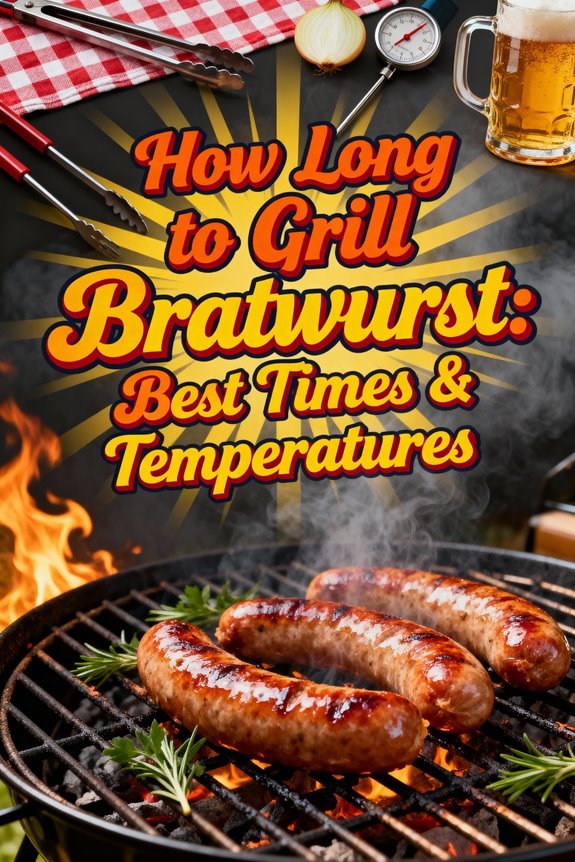
You’ll want to grill bratwurst for 15–20 minutes at temperatures between 350°F and 450°F, using a two-zone setup with indirect heat followed by a 2–3 minute direct sear. Always confirm your brats reach an internal temperature of 160°F with a meat thermometer before serving. For enhanced smokiness, consider cooking at lower temperatures (225°F) for 45–60 minutes, then finishing with high heat to crisp the casing. The techniques below will help you master precise temperature control and timing for consistently delicious results.
Essential Grill Temperature Ranges for Perfect Bratwurst
Achieving perfectly grilled bratwurst requires maintaining precise grill temperatures between 350°F and 450°F for ideal results. This medium grill heat range prevents flare-ups while guaranteeing even cooking across all bratwurst types. For enhanced smoky flavor, you’ll want to utilize medium-low temperatures around 300°F to 350°F with the lid closed, extending cooking time without burning the casing. When quick browning is necessary, high heat from 450°F to 500°F effectively crisps the surface during final finishing stages. Gas grills perform at their best at approximately 200°C (392°F) for consistent heat distribution. Similar to frozen burgers, a two-zone setup helps manage temperature control effectively. Charcoal setups benefit from two-zone configurations: one side maintaining medium heat while the other provides cooler indirect zones. Frequently turning the bratwurst during high heat grilling prevents bursting and ensures even browning on all sides. Using indirect heat method helps prevent casing rupture while maintaining optimal moisture levels. These temperature ranges guarantee your bratwurst develops proper texture while reaching the required 160°F internal temperature safely.
Grilling Time Guidelines for Different Cooking Methods
While temperature control establishes the foundation for grilling success, the specific cooking method you select determines the precise timing required to reach that 160°F internal temperature target. Traditional charcoal or gas grill types require 15–20 minutes over indirect heat, followed by a 2–3 minute direct sear. Pellet grills maintain consistent convection heating at 350°F for 15–20 minutes total. Smoking extends cook time to 45–60 minutes at 225°F, plus a 2–3 minute high-heat finish. Braising before grilling demands 45–60 minutes in liquid at 275°F, then final searing. Fresh bratwurst benefits from parboiling for 10 minutes in beer or water before grilling to prevent the casing from burning while ensuring the inside cooks through. Adding sliced onions to the parboiling liquid can enhance the bratwurst’s overall flavor profile. For indoor cooking, a cast iron skillet provides excellent browning and heat distribution when grilling isn’t possible. These cooking techniques vary greatly in duration—direct grilling proves fastest, while smoking and braising methods exceed 50 minutes but enhance flavor complexity and moisture retention.
Reaching the Safe Internal Temperature of 160°F
Don’t rely on visual cues alone; slight pinkness remains safe if you’ve confirmed proper internal temperature. Reaching exactly 160°F preserves juiciness and flavor, while exceeding this target causes dryness and texture degradation. Check multiple spots on thicker sausages to guarantee uniform cooking. Allow brief resting post-cooking for carryover heat to stabilize internal temperature before serving, maintaining both food safety protocols and ideal eating quality. Letting brats rest for 3 minutes after cooking prevents juice loss and ensures optimal texture. Consider placing finished brats in a warm beer bath with onions to maintain temperature and enhance flavor. Properly cooked bratwurst can be safely stored in the refrigerator for three to four days when kept below 40°F.
Setting Up Your Grill for Optimal Results
Proper grill setup determines whether your bratwurst emerges perfectly cooked or charred and burst. Establish a two-zone fire by concentrating coals on one side for direct high heat while keeping the opposite side coal-free for indirect medium heat. For gas grills, preheat to 350°F with one burner hotter for searing and another cooler for gentle cooking. This grill arrangement prevents flare-ups and allows controlled cooking. Before starting, ensure your grill is thoroughly cleaned to prevent old food residue from affecting flavor.
Preheat your grill with the lid closed for 10–15 minutes to achieve consistent temperatures between 300°F and 450°F. Oil grates lightly before placing bratwurst to prevent sticking. These heat zones enable you to cook brats thoroughly on indirect heat, then finish with direct heat for charring. Monitor airflow vents on charcoal grills to maintain ideal temperature control throughout the grilling process. Keeping the bottom vents fully open while adjusting top damper openings helps regulate precise heat levels. Keep the grill lid closed frequently to maintain a consistent smoking temperature.
Adding Flavor With Wood, Beer, and Seasonings
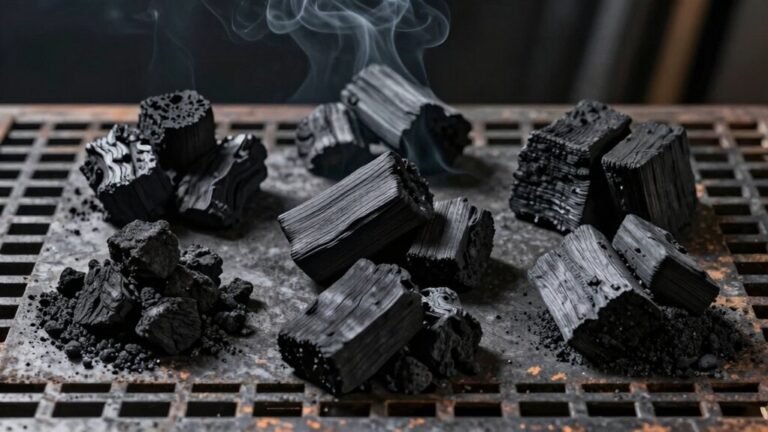
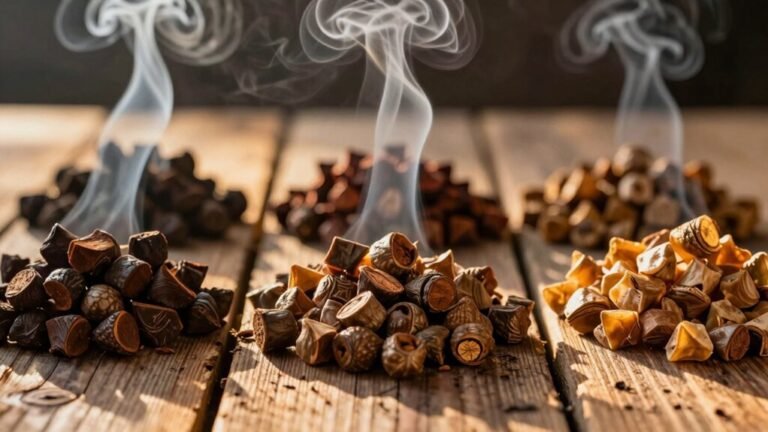
Enhancing bratwurst flavor requires strategic use of wood smoke, beer-based cooking liquids, and complementary seasonings during the grilling process. For wood flavoring, you’ll achieve ideal results with mesquite or pecan for heavy smoke, while apple and cherry woods provide lighter, sweeter notes. Limit smoking methods to 45-60 minutes at 225°F to prevent bitterness. Much like smoking brisket, maintaining a low and slow approach helps develop deeper flavors without drying out the meat. Beer infusion works by adding lager or ale to foil pans with aromatics during indirect grilling at 350-450°F, softening casings while imparting malty complexity. For seasoning techniques, apply spicy brown mustard, fennel seeds, and black pepper in braises, or create dry rubs with smoked paprika and garlic powder. Always avoid high heat before seasoning absorption to prevent casing rupture and flavor loss. Turn brats frequently to achieve even caramelization on all sides, which typically takes about 20 minutes depending on thickness. Before starting, ensure your grill grates are rust-free surfaces to prevent any metallic flavors from transferring to your bratwurst.
Best Toppings, Sides, and Serving Ideas
Selecting appropriate toppings and accompaniments transforms grilled bratwurst from simple sausage to a complete dining experience. You’ll achieve ideal flavor balance through strategic topping combinations: pair spicy brown mustard with sauerkraut and caramelized onions, or layer Swiss cheese with pickled vegetables for enhanced complexity. Select pretzel buns or German brötchen over standard hot dog buns to maintain authentic serving styles. Toast buns at 350°F for 2-3 minutes before assembly. For optimal flavor absorption, let your brats achieve internal temperature stability similar to BBQ chicken thighs before adding toppings.
Complement your bratwurst with traditional sides including coleslaw, potato salad, and dill pickle spears. For elevated presentations, incorporate specialty sauces such as cranberry BBQ or Garlic Ginger Teriyaki. Establish a brat bar with multiple condiment stations, allowing customization across diverse palate preferences. Consider serving pasta salad with fresh vegetables for a light and refreshing side option. Serve grilled peppers and onions alongside for smoky, sweet contrast. Consider adding crunchy potato chips directly onto your bratwurst for an unexpected textural element that enhances each bite.