
Studies show that over 60% of grill malfunctions stem from regulator issues. You’re likely unaware that your current setup might not be optimized for peak performance. The Model 102-B and Maxitrol RV48L represent two distinct approaches to pressure regulation, each with unique advantages. Understanding which suits your specific needs requires examining key factors that most grill owners overlook entirely.
Quick Overview
- Model 102-B regulator maintains precise outlet pressures of 0.95-1.05 Kpa for natural gas with reliable 50 L/min flow rates.
- Maxitrol RV48L delivers consistent 3-6 water column pressure output ideal for outdoor cooking applications with 1/2 inch connections.
- Natural gas grills require approximately 4 inches of water column pressure; verify manufacturer specifications before selecting your regulator.
- Both regulators operate safely between 32°F and 225°F, ensuring reliable performance across varying seasonal climate conditions year-round.
- Dual-fuel regulators like the 102-B allow easy adjustment between natural gas and propane via simple aluminum knob switching.
| Natural Gas and LPG Pressure Regulator with Adapters |

| Versatile Dual-Fuel Choice | Gas Type Compatibility: Natural gas and LPG | Outlet Pressure Range: 0.95-1.05 Kpa (NG); 2.45-2.55 Kpa (LPG) | Pipe Thread Size: 1/2″ FPT inlet and outlet | VIEW LATEST PRICE | Read Our Analysis |
| Maxitrol RV48L Natural Gas Pressure Regulator |
| Professional-Grade Precision | Gas Type Compatibility: Natural gas only | Outlet Pressure Range: 3-6 water column | Pipe Thread Size: 1/2″ FPT inlet and outlet | VIEW LATEST PRICE | Read Our Analysis |
More Details on Our Top Picks
Natural Gas and LPG Pressure Regulator with Adapters
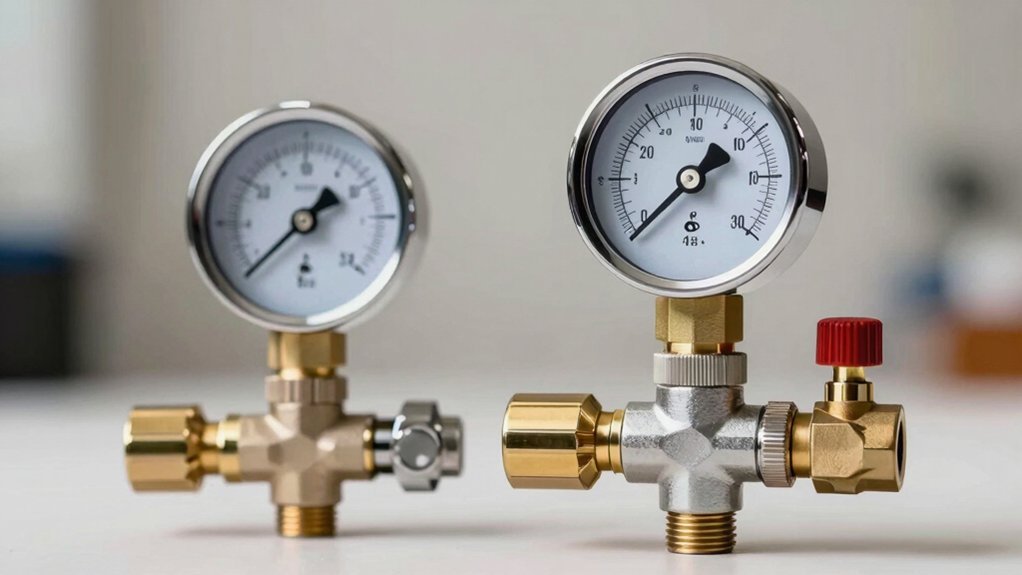
If you’re switching between natural gas and propane without replacing equipment, the Model 102-B regulator‘s dual-fuel design is your solution. This 1/2″ FPT regulator comes factory-set for LP mode but you’ll easily adjust it to natural gas by unscrewing the aluminum knob. You’ll get two brass NPT conversion adapters—1/2 NPT male x 3/8 flare male and 1/2 NPT male x 1/2 NPT male—plus thread tape for secure connections. The regulator maintains precise outlet pressures: 2.45-2.55 Kpa for propane and 0.95-1.05 Kpa for natural gas, delivering 30 L/min and 50 L/min flow rates respectively. It operates reliably between 32°F and 225°F, making it perfect for your grill, heater, or welding equipment.
- Gas Type Compatibility:Natural gas and LPG
- Outlet Pressure Range:0.95-1.05 Kpa (NG); 2.45-2.55 Kpa (LPG)
- Pipe Thread Size:1/2″ FPT inlet and outlet
- Operating Temperature Range:32°F-225°F (0°C-107°C)
- Adjustability:Adjustable between NG and LP modes
- Included Accessories:Two brass adapters and thread tape
- Additional Feature:Dual fuel interchange capability
- Additional Feature:Two brass conversion adapters
- Additional Feature:Higher natural gas flow rate
Maxitrol RV48L Natural Gas Pressure Regulator
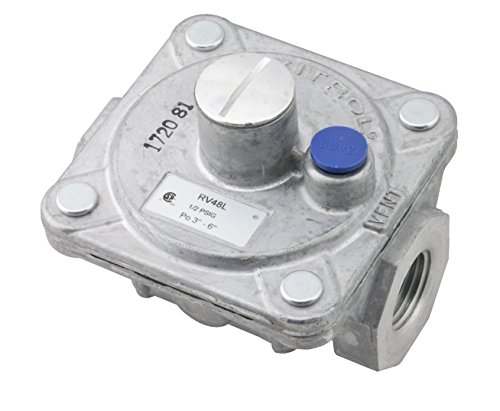
The Maxitrol RV48L is the ideal choice for grill owners who need dependable pressure regulation in varying outdoor conditions. This 1/2 PSIG regulator maintains outlet pressure between 3-6 water column, guaranteeing consistent gas flow to your burners. It features 1/2 inch female pipe thread connections for straightforward installation. Operating reliably from 32°F to 225°F, the RV48L handles temperature fluctuations without compromising performance. However, you’ll want to avoid installing it near heating equipment or extreme cold spots, as temperature extremes can affect the internal spring resistance. When measuring your gas pipe opening, verify accuracy—the regulator opening diameter measures 13/16 inches for proper fit. This robust design delivers the stable pressure your grill demands.
- Gas Type Compatibility:Natural gas only
- Outlet Pressure Range:3-6 water column
- Pipe Thread Size:1/2″ FPT inlet and outlet
- Operating Temperature Range:32°F-225°F (0°C-107°C)
- Adjustability:Fixed natural gas regulation
- Included Accessories:No accessories included
- Additional Feature:Single-stage pressure reduction design
- Additional Feature:Compact 13/16 inch opening
- Additional Feature:Fixed natural gas optimization
Factors to Consider When Choosing a Natural Gas Regulator for Grill
You’ll want to evaluate your regulator’s pressure output requirements first, ensuring it matches your grill’s specifications exactly. Next, you should verify the temperature tolerance range, pipe thread compatibility, and flow rate capacity all align with your specific setup and climate conditions. Finally, you must confirm the regulator’s fuel type compatibility, as natural gas regulators aren’t interchangeable with propane systems.
Pressure Output Requirements
Since your grill’s safe and efficient operation depends on precise pressure settings, matching your regulator‘s outlet pressure to your equipment’s specifications is crucial. You’ll find that natural gas grills typically require outlet pressures around 4 inches of water column (w.c), while propane grills demand higher pressures between 10-11 w.c. Installing a regulator with the wrong outlet pressure can compromise your grill’s performance or create safety hazards.
Before purchasing a regulator, you should verify your grill manufacturer’s pressure recommendations in the manual. You’ll also want to confirm that the regulator’s inlet pressure aligns with your gas supply—natural gas systems usually operate at 1/2 PSI inlet pressure. This alignment guarantees your regulator functions correctly within your specific system’s parameters.
Temperature Tolerance Range
Operating your natural gas grill regulator outside its designed temperature range can degrade performance and create safety risks. Most regulators function best between 32°F and 225°F (0°C to 107°C). Beyond these limits, extreme temperatures compromise the spring’s resistance and disrupt consistent gas flow.
Cold environments particularly threaten your regulator’s internal mechanisms, potentially causing malfunctions or erratic performance. Heat poses equally serious concerns—you’ll want to install your regulator far from heating equipment and direct sunlight to prevent damage.
When selecting a regulator for your grill, verify its temperature tolerance matches your local climate and installation conditions. This alignment guarantees your regulator maintains top efficiency year-round, protecting both your equipment and your grilling experience.
Pipe Thread Compatibility
Matching your regulator’s inlet and outlet pipe thread sizes to your existing gas piping infrastructure is critical for a successful installation. Most residential natural gas regulators feature 1/2 inch FPT (Female Pipe Thread) connections for both inlet and outlet ports, which you’ll likely need to verify against your current setup.
You should check whether your regulator comes with necessary conversion adapters, such as 1/2 NPT male x 3/8 flare male or 1/2 NPT male x 1/2 NPT male connectors. Incompatible thread sizes create potential leaks and unsafe gas flow, directly compromising your grill’s safety and performance.
Always confirm pressure ratings match your gas supply specifications too, ensuring ideal operation throughout your regulator’s lifespan.
Flow Rate Capacity
Your regulator’s flow rate capacity determines how much gas reaches your grill each minute, directly affecting cooking performance and flame consistency. Most residential natural gas regulators deliver between 30 and 50 liters per minute, though your specific needs depend on your grill size and cooking requirements.
You’ll want to match your regulator’s capacity to your appliance’s demands. Undersized regulators can’t supply sufficient gas, causing uneven cooking and unstable flames. Oversized ones waste energy and create control issues.
Keep in mind that liquefied gas regulators typically handle lower flow rates than natural gas models due to density differences. Always check your grill’s specifications and select a regulator that meets those requirements for peak performance and reliable operation.
Fuel Type Compatibility
Fuel type compatibility stands as a critical factor in regulator selection, since natural gas and liquefied petroleum gas (LPG) operate at fundamentally different pressures and flow rates. Natural gas requires lower inlet pressure around 1.74 Kpa with outlet pressure between 0.95-1.05 Kpa, while LPG demands higher pressures at approximately 2.74 Kpa inlet and 2.45-2.55 Kpa outlet.
You’ll also notice flow rate differences matter considerably. Natural gas systems need higher flow rates up to 50 L/min, whereas LPG systems typically max out at 30 L/min. To maximize flexibility, you should consider regulators featuring adjustable settings that easily switch between both fuel types, allowing you to adapt to your specific grilling needs without purchasing multiple regulators.
Adjustability and Switching Capability
When you’re selecting a natural gas regulator, adjustability and switching capability shouldn’t be overlooked—they’re what transform a one-trick regulator into a versatile tool that adapts to your fuel source. Look for models featuring a simple switching mechanism, like a knob, that lets you toggle between LPG and NG without hassle. You’ll want to verify the regulator’s factory setting matches your primary fuel type, typically LP mode for liquefied gas applications. Equally important is checking the adjustment range—ensure it accommodates your grill’s specific inlet and outlet pressure requirements. This flexibility guarantees your grill operates efficiently at desired temperatures and gas flow rates, maximizing performance regardless of which fuel you’re using.