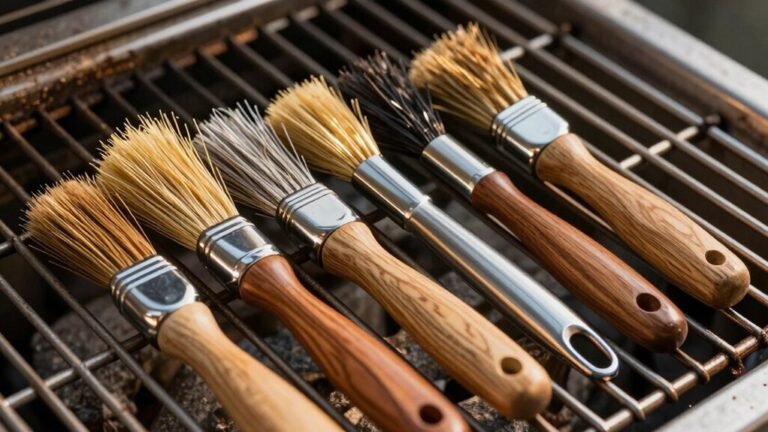


Start by ensuring your grill’s completely cool, then gather essential supplies: wire brush, degreaser, and protective gloves. Remove and soak grates in a vinegar-salt solution to eliminate stubborn buildup. Scrape carbonized debris from the interior bowl using a stainless steel brush, then empty the ash catcher thoroughly. Wipe exterior surfaces with mild soapy water and a soft cloth, drying immediately to prevent rust. Finally, season cleaned grates with high-temperature oil and inspect all components for wear—following these maintenance protocols will maximize your grill’s operational lifespan and performance efficiency.
Gather Your Supplies and Prepare the Grill
Before initiating any cleaning procedures, verify your charcoal grill has cooled completely—this critical safety step prevents burns and eliminates fire hazards from residual embers. Implement essential safety precautions by working in well-ventilated outdoor spaces and wearing heat-resistant gloves if components retain warmth.
Assemble your cleaning arsenal: steel or brass bristle grill brush, commercial degreaser or hot soapy water solution, scrubbing pads, clean rags, and a putty knife for removing carbonized deposits. Similar to propane safety procedures, always work in a properly ventilated area when cleaning any type of grill. Include steel wool in your toolkit for fine detail cleaning on both grates and exterior surfaces. Systematically detach grill grates, drip trays, and ash catchers following manufacturer specifications. Using baking soda paste can help break down stubborn grease buildup on interior surfaces.
Use an ash bucket or shop vac for cold ash collection, ensuring proper ash disposal in metal containers—never plastic or flammable receptacles. Empty built-in ash pans completely to maintain ideal airflow and grill performance.
[affiai keyword=”charcoal grill cleaning supplies and tools” template=”carousel” count=”3″
Deep Clean the Grill Grates
Elevated grill grate surfaces demand systematic attention after you’ve cleared residual ash and prepared your workspace. Remove the grates and allow complete cooling before addressing buildup. Use a stiff wire brush to scrape visible food residue, avoiding excessive force on porcelain-coated or cast iron grate materials to prevent protective layer damage. Heat the grates briefly before cleaning to help loosen stuck-on debris. Just as with indirect heat grilling, maintaining proper temperature control helps preserve your grates’ longevity.
Apply a baking soda and dish soap paste to all surfaces, letting it penetrate for 30 minutes minimum. Commercial cleaning solutions work effectively for heavy buildup, though you’ll need to verify compatibility with your specific grate materials. Scrub thoroughly with appropriate tools—non-abrasive pads for coated surfaces, wire brushes for stainless steel. For trouble spots with stubborn residue, a Scotch pad provides deeper cleaning power.
Rinse completely with clean water, removing all chemical residues. Air dry grates fully before reinstallation, as moisture accelerates corrosion on cast iron and steel surfaces.
[affiai keyword=”grill grate cleaning brushes and tools” template=”carousel” count=”3″
Scrub the Interior Bowl and Lid
Once you’ve addressed the grill grates, the interior bowl and lid require systematic cleaning to maintain peak performance and prevent contamination. Use a stainless steel grill brush to remove carbon buildup from these surfaces while the grill is warm—not hot. Brush gently to avoid scratching finishes, particularly on stainless steel components. For porcelain-enameled interiors, switch to nylon brushes to preserve the coating. Regular cleaning helps prevent pest attraction and ensures better cooking results. Mild soap solutions work best for removing grease without damaging protective coatings.
After brushing, scrape loose ash toward the ash catcher and empty it after every few uses to prevent moisture absorption and rust. Apply warm, soapy water with a sponge to remaining grime, using non-abrasive pads for stubborn deposits. Rinse sparingly and dry thoroughly before reassembly. These cleaning techniques prevent flaking debris from contaminating food and extend your grill’s operational lifespan. Microfiber towels are particularly effective for capturing dirt particles during the final drying stage.
[affiai keyword=”grill interior cleaning brush kit” template=”carousel” count=”3″
Wipe Down the Exterior Surfaces
After securing the grill’s interior cleanliness, you’ll shift your attention to maintaining the exterior surfaces, which protect internal components and determine the unit’s visual presentation. Begin exterior maintenance once the grill reaches ambient temperature to prevent thermal injury. Mix mild dish soap with warm water, then apply using a soft cloth or non-abrasive sponge to porcelain-coated and stainless steel surfaces. For stubborn grease deposits, utilize a commercial degreaser, allowing proper dwell time before removal. When selecting cleaning products, avoid bleach-based formulations and abrasive compounds that compromise surface integrity. Rinse thoroughly with clean water to eliminate soap residue, then dry immediately using microfiber cloths to prevent water spotting. For stainless steel components, consider glass cleaner applications to achieve streak-free finishes. Address small crevices using a dedicated toothbrush. You can also use an exterior grill cleaner or damp cloth for quick maintenance between deep cleaning sessions. For particularly tough buildup, create a natural paste solution using coarse salt mixed with cooking oil to gently scrub away stubborn residue. Just as a low and slow cooking method takes time to perfect a brisket, thorough exterior cleaning ensures your grill maintains its optimal condition.
Perform Regular Maintenance and Seasoning
Establishing a systematic maintenance protocol extends your charcoal grill’s operational lifespan while ensuring consistent cooking performance. After each grilling session, brush grates with a wire grill brush to eliminate food residue. Every few months, conduct deep cleaning using mild soap and water to remove heavy buildup. For stubborn grime, use Bar Keepers Friend or similar specialized cleaners for optimal results. Implement proper seasoning techniques by applying a thin layer of high-temperature oil like canola or peanut oil to clean grates, then heat to 400-500°F for 30-40 minutes. This creates a protective non-stick surface. Repeat seasoning multiple times for ideal results. Essential maintenance tools include quality grill brushes and appropriate cleaning solutions. Monitor grates regularly for rust formation, removing it promptly with a steel brush. Store your grill in dry conditions during off-seasons to prevent moisture-related deterioration. Seasoning burns off manufacturing chemicals from new or freshly cleaned grates, ensuring your food tastes fresh and safe. For tough rust spots, soaking grates in a vinegar salt mixture overnight can help loosen stubborn oxidation.