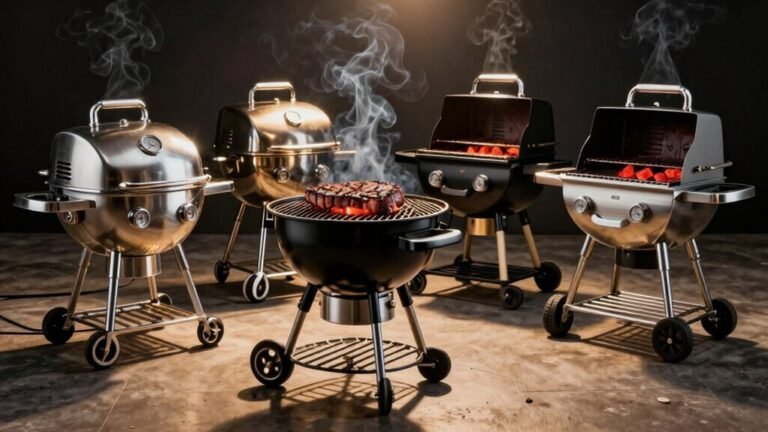

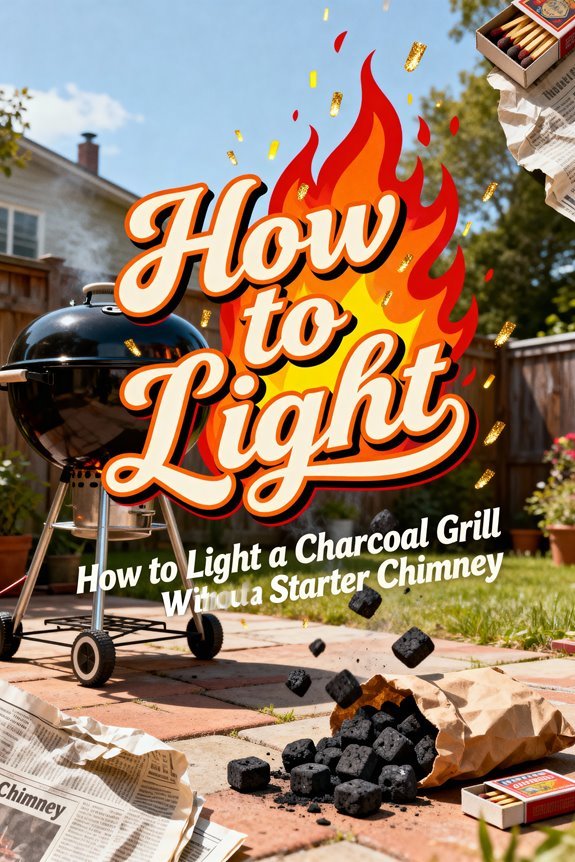
You can light your charcoal grill without a chimney starter by arranging coals in a pyramid shape and placing a natural fire starter at the base—crumpled newspaper, egg carton sections filled with dry materials, or compressed solid starters work excellently. For faster results, use a propane torch or electric starter to ignite coals in under 15 minutes. Ascertain bottom vents are fully open to maximize airflow, and wait until coals develop a white-gray coating before cooking. The techniques below will help you master temperature control and avoid chemical residue.
Direct Fire Starter Methods That Work Every Time
Lighting charcoal doesn’t require lighter fluid or waiting around for a chimney starter to do its work. Compressed solid fire starters deliver exceptional fire starter efficiency—simply place one under your charcoal pile, ignite it with a match, and let the flame spread upward. These all-natural wood cubes burn hot enough to ignite charcoal in any weather without imparting chemical flavors.
For faster charcoal ignition techniques, propane torches cut lighting time to under 15 minutes. Direct the flame at your charcoal pile’s base, and the intense heat penetrates deep to start combustion quickly. Electric heat guns offer similar speed, combining concentrated flame with forced air to ignite a full load in roughly 20 minutes—though you’ll need a power source nearby. Once your coals develop a white and ashy appearance, they’re ready for cooking. These methods help maintain a steady 225 degree temperature ideal for smoking meats like bratwurst. Proper airflow control through vent adjustments helps maintain consistent heat throughout your cooking session.
Natural Ignition Techniques Using Household Items
Your kitchen contains several effective alternatives to commercial fire starters that’ll ignite charcoal reliably without chemicals. Newspaper ignition remains the most accessible method—crumple sheets loosely beneath your charcoal for ideal airflow and sustained flame. You’ll achieve better results by combining newspaper with cardboard pieces arranged in a log cabin configuration. Top damper vents should remain fully open during the lighting process to maximize airflow and heat buildup. Arranging charcoal in a pyramid shape helps concentrate heat for faster ignition.
An egg carton firestarter offers superior performance by filling compartments with dry leaves, shredded paper, or small twigs. Place one carton under your charcoal pile and light the edges—the cardboard burns slowly while the filling materials generate sustained heat. A single egg carton can potentially ignite your grill multiple times, making it an economical and eco-friendly choice.
For extended burn time, roll corrugated cardboard tightly or use oil-soaked paper towels. The key to success with any method is maintaining proper airflow underneath your charcoal stack, allowing oxygen to feed the flames consistently.
Proper Charcoal Arrangement for Fast Lighting
The geometry of your charcoal pile determines ignition speed more than any other factor. Build a pyramid or teepee structure with smaller lump charcoal at the base and larger briquettes on top. These charcoal shapes concentrate heat at the center while creating natural air channels throughout the pile. Leave space underneath your mound—elevating pieces off the grate allows bottom airflow that’s critical for combustion. The airflow benefits multiply when you avoid tight packing; loose arrangements let oxygen circulate freely without smothering flames. Place your fire starter at the base center, then construct a small “hut” of charcoal around it to ignite multiple pieces simultaneously. Don’t bury the starter deep—maintain accessibility while ensuring contact with several charcoal pieces for rapid, even flame propagation. Ensure charcoal is dry before arranging it, as moisture significantly increases heating time and can prevent proper ignition. Once lit, you can create two-zone fires by moving the charcoal to one side of the grill for better temperature control. This arrangement maximizes radiant heat transfer from the burning embers to cook your food efficiently.
Electric and Modern Alternatives to Traditional Methods
Why struggle with matches and lighter fluid when electric charcoal starters offer ignition in under 15 minutes without chemicals or flames? These electric firestarters feature heating coils (700-800W) that you insert directly into your charcoal pile, plugged into a standard outlet. Heat radiates above and below the element, igniting briquettes or lump charcoal efficiently. Just like achieving the perfect golden crispy crust on grilled sandwiches, proper heat distribution is crucial for even cooking results. Like low temp smoking techniques used for tender chicken breasts, these starters provide consistent, controlled heat.
Modern handheld devices like the Looft Lighter blow superheated air onto coals, providing rapid, even ignition without toxic fumes. Battery-powered blowers increase oxygen flow to accelerate combustion, while eco friendly ignition methods eliminate lighter fluid contaminants that affect food flavor. The Looft charcoal lighter operates at temperatures up to 1200°F for optimal ignition performance.
For advanced setups, cage igniters optimize airflow beneath charcoal, delivering uniform heat distribution. These reusable stainless steel tools reduce waste and comply with environmental standards while maintaining technical precision throughout the lighting process.
[affiai keyword=”electric charcoal starter and ignition tools” template=”carousel” count=”3″
Essential Safety Tips for Chimney-Free Grilling
When grilling without a chimney starter, you’re working directly with open flames and accelerants, which demands heightened awareness of fire dynamics and environmental hazards. Prioritize grill safety by maintaining 5 feet clearance from combustible structures and positioning your setup on stable, non-combustible surfaces. Never add lighter fluid to hot coals—this causes dangerous flare-ups. Keep fire extinguishers or water sources within immediate reach, and use heat-resistant gloves for charcoal handling. Pour starter fluid only onto cold charcoal before ignition, then cap and distance containers from heat. Guarantee proper ventilation in outdoor areas to prevent carbon monoxide buildup. Monitor ignition continuously without leaving the grill unattended. Keep a bucket of sand nearby as an alternative to water for extinguishing sudden flare-ups. Allow coals to cool completely before disposal in metal containers, preventing ember-related fires. Much like with cast iron skillets, maintaining proper heat control is essential for safe and effective grilling results. Regular deep cleaning procedures help prevent dangerous grease fires and ensure optimal grill performance.
Timing Your Charcoal Light for Perfect Results
Mastering fire safety sets the foundation, but proper timing transforms those safely lit coals into a high-performance cooking surface. Expect 15-20 minutes for complete charcoal ignition timing when lighting manually. Don’t dump coals at first smoke—wait until they’re covered in white-gray ash with red glow underneath. Premature spreading yields disappointing 200°F temperatures instead of proper searing heat. Preheating the grates thoroughly helps prevent food from sticking while cooking. A consistent 375-400°F temperature is ideal for grilling most burgers to perfection.
Stack your charcoal pyramid-style for concentrated ignition, then monitor color development rather than relying on flames alone. Lump charcoal heats faster but burns quicker than briquettes, affecting your timeline. Once majority of coals turn ashy, spread them for cooking temperature control using the two-zone method. Adjust airflow vents immediately to regulate burn speed. Open bottom vents completely to maximize oxygen flow and accelerate the ignition process. Time your ignition to coincide with food prep—your grill reaches peak temperature exactly when you’re ready to cook.
Maximizing Flavor While Avoiding Chemical Residue
Your choice of ignition method directly determines whether your grilled food tastes like perfectly charred steak or petroleum-soaked disappointment. Lighter fluid leaves chemical residue that penetrates food surfaces, compromising flavor retention and introducing toxic compounds. Instead, adopt chemical alternatives like wax-based fire starters, propane torches, or electric starters for clean ignition.
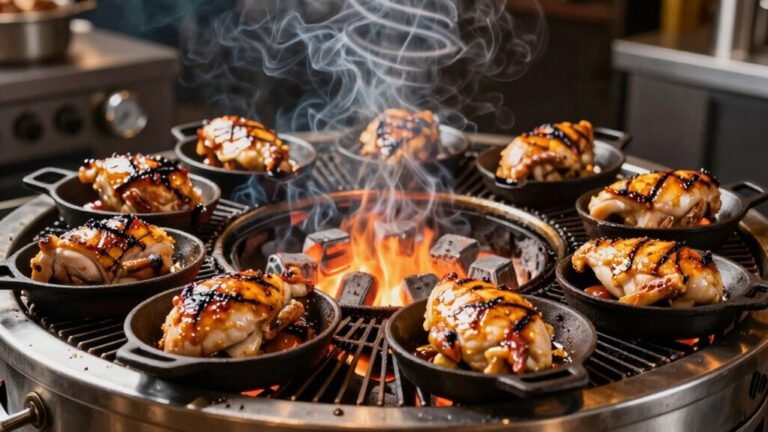
Lump charcoal outperforms briquettes in natural flavor profiles since it contains fewer binders and additives. Select varieties like mesquite or hickory to enhance smoke characteristics without artificial interference. Natural ignition tools—Looft Lighters and Bison Airlighters—use superheated air to ignite coals without introducing foreign substances. Regular grill maintenance with vinegar and salt helps prevent rust buildup that can affect food quality. For dishes like bone-in chicken thighs, a clean burning fire ensures even cooking during the crucial 20-25 minute grilling time.
Maintain proper ventilation throughout the lighting process to maximize combustion efficiency and minimize acrid smoke. Start by igniting one to three pieces of charcoal, then gradually add more as the heat builds for controlled, successful grilling. Regular grill maintenance prevents residual buildup that contaminates subsequent cooking sessions, ensuring every meal showcases pure, unadulterated flavors.
[affiai keyword=”natural charcoal grill starter no chemicals” template=”carousel” count=”3″