

You’ll need 2.5 to 3 hours to grill baby back ribs to tender perfection at a consistent 225-250°F. Target an internal temperature of 198-202°F, measured between the bones at the thickest section. The ribs are done when they exhibit noticeable flex with slight surface cracking and the meat pulls cleanly from the bone ends with ¼ to ½ inch exposure. This guide breaks down the precise techniques, preparation steps, and visual cues that’ll guarantee restaurant-quality results every time.
Understanding Temperature and Timing for Baby Back Ribs
When you’re grilling baby back ribs, temperature control separates mediocre results from competition-quality meat. Target an internal temperature of 198-200°F for peak tenderness—well above pork’s safe minimum of 145°F. At this range, connective tissues break down completely, and bones pull back cleanly. Consider adding apple juice mixture during wrapping to enhance tenderness and flavor.
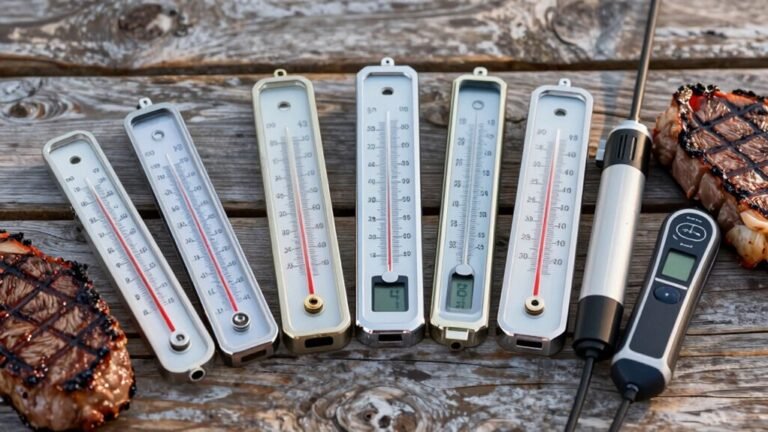
Maintain your grill between 250-350°F depending on cooking methods. Set up two zones: direct heat for searing (8-10 minutes per side), then indirect heat at 250-300°F for slow cooking. Many pitmasters use the popular 2-2-1 method for consistently tender results. This dual-zone approach guarantees even heat distribution without compromising meat quality. Use an instant probe thermometer to verify accurate temperature readings throughout the cooking process.
Total cook time runs 1.5-3 hours. After searing, slow-cook for 45 minutes to 2 hours until ribs reach 165°F, then wrap and finish to 198-200°F—adding another 30-60 minutes. Always probe the thickest section, avoiding bones for accurate readings.
Essential Preparation Before You Fire Up the Grill
Perfect temperature control means nothing if your ribs aren’t properly prepped. Start with membrane removal—slide a butter knife under the thin silver skin on the bone side, grip it with a paper towel, and peel it off in one piece. Next, focus on fat trimming by cutting away excess surface fat and any loose meat that’ll burn during cooking. Just like when preparing a T-bone steak, maintaining proper grill temperature is crucial for achieving the best results. Most smokers achieve optimal tenderness when cooking at 225 degrees Fahrenheit.
Your seasoning techniques determine flavor penetration. Apply kosher salt first for dry brining, letting it sit 4-12 hours to enhance moisture retention. Follow with your rub, pressing firmly into both sides without a binder—the meat’s natural moisture provides adequate adhesion. After applying the seasoning, pat the ribs dry to ensure the rub adheres properly to the surface.
Cut full racks in half for better grill management and even heat exposure. These preparation steps guarantee consistent cooking and superior results.
Setting Up Your Grill for Optimal Results
Your grill setup directly determines whether you’ll achieve fall-off-the-bone tenderness or serve up dried-out leather. Configure your grill for indirect heat by positioning coals or active burners on opposite sides, leaving the center empty. Place a drip pan filled with apple juice beneath where the ribs will sit—this catches drippings and maintains moisture.
Target 225°F to 250°F for best collagen breakdown. On gas grills, disable the middle burner and run side burners on low. Charcoal grills require precise vent adjustment to regulate airflow and maintain stable temperatures. Similar to smoking brisket, this low and slow cooking method allows connective tissues to properly break down. Using a charcoal chimney starter ensures even heat distribution from the beginning of your cook.
Add soaked wood chips (hickory or apple) near—not directly on—your heat source for the first two hours only. Excessive smoke creates bitterness. Install a quality probe thermometer; built-in gauges often read inaccurately. Baby back ribs are cut from the loin area and require careful temperature monitoring throughout the cooking process.
Key Factors That Impact Your Cook Time
Temperature stands as the single most critical variable governing rib cook time—shift from 225°F to 300°F and you’ll cut your timeline nearly in half. Beyond this, several cook time influences demand your attention. Baby backs finish faster than St. Louis-style due to reduced connective tissue, while thicker racks extend timelines regardless of cut. Environmental conditions play a measurable role: wind, rain, and outdoor temperature drop your effective cooking temp, forcing longer sessions and increased fuel burn. Your method matters too—foil-wrapping with liquid accelerates tenderizing, while frequent lid-lifting bleeds heat and adds minutes. Most pitmasters target 275°F for 4 hours to achieve consistently tender results. Many pros enhance tenderness by adding butter and honey during the wrapped smoking phase. Rib rack placement affects heat exposure; center positions cook more evenly than edges. Watch for meat shrinking back from bones as a reliable visual cue that your ribs are approaching proper doneness. Master these variables to predict doneness with technical precision.
How to Know When Your Ribs Are Perfectly Done
When ribs reach their ideal doneness, they’ll broadcast clear signals through visual cues, physical texture, and internal temperature—learn to read all three simultaneously rather than relying on any single indicator.
Target 198°F-202°F internally for baby backs, measuring between bones at the thickest section. Flexibility indicators tell the story: perform the bend test by lifting one rack end—you’ll see noticeable flexing with slight surface cracking. Stiff ribs need more time; ribs that break apart easily signal overcooking. Achieve optimal results by maintaining a low and slow temperature between 225-250°F throughout the cooking process. Consider applying a heavy wood smoke during the first few hours to develop a rich, flavorful bark.
Execute texture tests methodically. The twist test should reveal meat pulling cleanly from bone ends with gentle rotation. Insert a skewer between bones—it’ll glide through with minimal resistance when collagen has properly converted to gelatin. You’ll observe ¼-½ inch bone exposure as meat shrinks back, accompanied by clear juices and deep reddish-brown coloring with rendered fat’s characteristic sheen. This meat retraction from bone occurs as collagen breaks down during the cooking process.
Finishing Techniques for Maximum Flavor
After ribs achieve their target doneness, strategic finishing transforms them from properly cooked to exceptional through layered flavor development and textural contrast. Remove your foil-wrapped ribs and return them to direct heat. Apply BBQ sauce liberally to both sides, brushing multiple coats to build complexity. The direct flame caramelizes the sauce, creating that signature sticky exterior and rosy red color. These finishing touches take just minutes but deliver maximum impact.
For glaze options beyond traditional BBQ sauce, consider honey-butter mixtures or apple juice reductions. Each application should last 2-3 minutes per side over high heat. The goal: sauce adherence without burning. Keep total grill times under 5 minutes per side to maintain the meat’s moisture and prevent overcooking. Setting up a two-zone fire helps prevent flare-ups during this crucial finishing phase. Rest your ribs five minutes post-grill—this step locks moisture and allows flavors to settle before serving. Popular wood choices like hickory and cherry pellets infuse the meat with complementary smoky flavors during the finishing process.
Serving Suggestions and Flavor Variations
Your perfectly grilled baby back ribs deserve accompaniments that enhance rather than compete with their smoky richness. For side dish pairings, balance your plate with crisp coleslaw—its acidity cuts through fat while adding textural contrast. Grilled corn with lime-butter or elote-style toppings maintains the outdoor cooking theme. Roasted potatoes with rosemary or creamy mac and cheese provide substantial, comforting elements that absorb excess sauce. A classic baked bean casserole adds hearty protein and complements the savory flavors of your ribs.
Strategic condiment suggestions elevate your rib presentation. Deploy vinegar-based slaws alongside sweet BBQ sauces to give guests flavor customization options. Fresh Caprese or citrus-based salads brighten the palate between bites. For balanced nutrition and visual appeal, plate ribs with one starch and one fresh vegetable side. Just like indirect heat grilling helps achieve even cooking with frozen meats, varying your serving temperatures creates an engaging dining experience. Consider pairing with BBQ corn salad for a summery side that complements the smoky main dish. Serve on cast iron platters to maintain temperature while delivering rustic presentation that matches your technique-driven approach to grilling.